
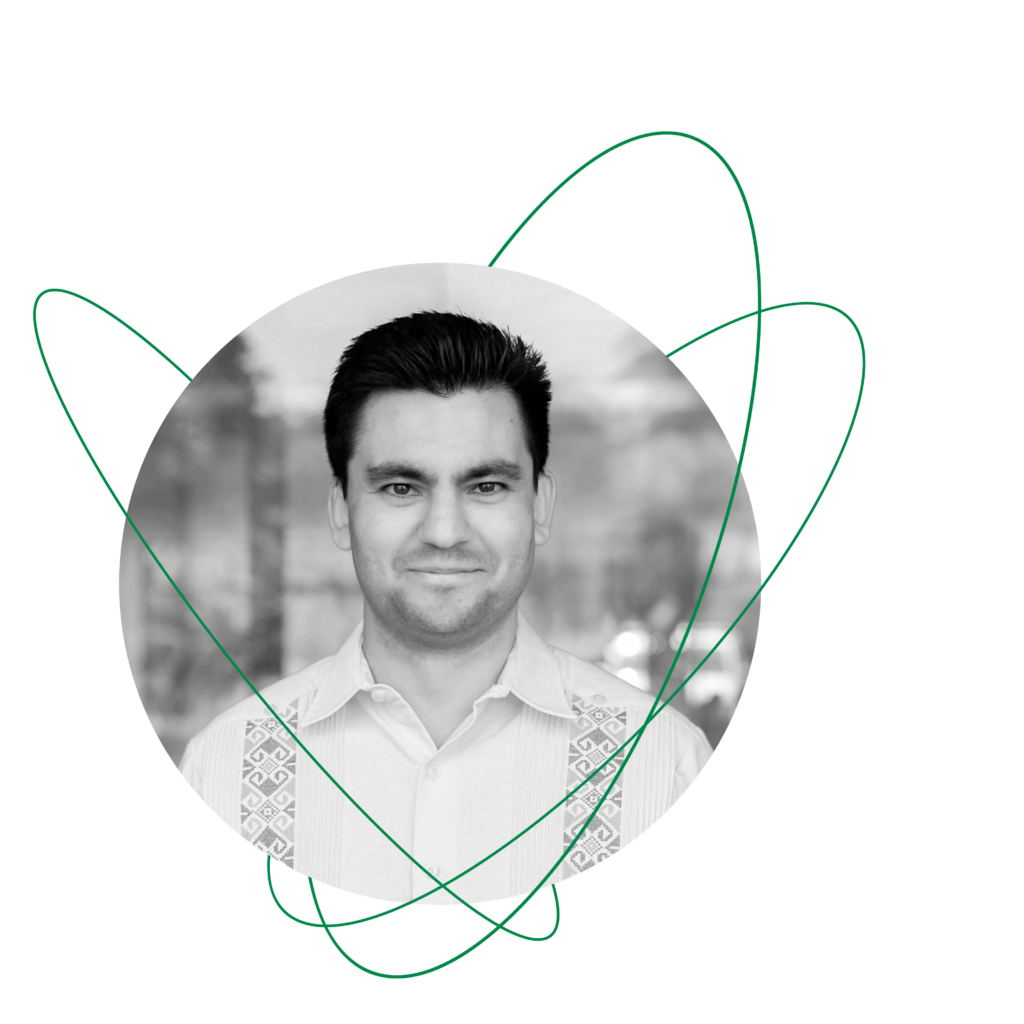
Patrick Guillevic M.Sc.
Partner Organisations
University of the Bundeswehr Munich (PhD awarding institution)
Thales Alenia Space France
Supervisors
Dr.-Ing. Thomas Delamotte
Dr. Hervé Legay
Description of the Work Project
Earth observation and monitoring satellites have become strategic assets for many key areas such as agriculture and environmental public policy. The observation data are handled on board the satellites by the so-called payload data handling and transmission (PDHT) subsystems, which are responsible for storing and forwarding the information to ground data centres for further processing and evaluation. The growing number of missions launched to provide Earth observation and monitoring services, together with the time-critical nature of data access, calls for a fundamental rethinking of the ground segment infrastructure. Whereas past missions were generally designed with dedicated ground infrastructures, a recent trend often referred to as Ground Segment as a Service (GSaaS) promotes the mutualization of ground assets among multiple missions. This approach allows mission operators to contract providers with existing global infrastructures, enabling significant capital expenditure savings and optimizing the use of ground stations. However, allocating ground segment resources under time and capacity constraints has become an increasingly complex problem given the ever-growing number of missions. Expanding the network with new ground segment sites to meet capacity demands is not a viable solution due to geographical, political, economic, and technical (e.g., interference) limitations. In this context, advanced real-time scheduling solutions must be developed to ensure that the service level agreements (SLAs) of the missions, such as required uplink and downlink data rates or the availability of contact windows, are fulfilled with the existing ground infrastructure. Consequently, this project aims to develop satellite range scheduling solutions for multi-mission ground segments dedicated to LEO/MEO Earth observation and monitoring systems. Unlike previous studies, this work will incorporate various ground antenna technologies (e.g., steerable reflectors, small- and large-scale sparse phased arrays) to thoroughly assess their impact on resource allocation. The potential of MIMO technology to enhance access to scarce spectrum resources will also be evaluated. The work will deliver an optimization framework for ground segment design that balances resource constraints with the need for resilient operations.
3. Core activities
- Definition of representative scenarios for multi-mission ground segments operating in the S-, X-, and/or Ka-bands for Earth observation and monitoring missions, including the specification of required data rates, quality-of-service parameters, and data flow prioritization for Earth–space and space–Earth links
- Development of optimization methods for the efficient dimensioning of multi-mission ground segments, aimed at ensuring sustainable and resilient support for increasing data traffic demands

University of the Bundeswehr Munich, Germany
Thales Alenia Space, Toulouse,
France (Secondment)
University of the Bundeswehr Munich, Germany
Thales Alenia Space, Toulouse,
France